


Hello and welcome to The Blackpool Lead.
Blackpool Council insists that its planned rock groynes are the best way to protect the town from coastal erosion - and says it did consider a number of alternatives.
But it is the objection from the RNLI over the safety risks that it could pose that lands strongest and now the council simply must work with them to address those fears.
They said this week they were unable to comment on those safety fears while the planning process is ongoing. But it is clear they need to be addressed before the project begins in any form.
The alternative is that Blackpool Council is directly blamed if the project becomes responsible for any tragedy.
We’ve looked into the debate - which is even causing disagreement among Reform UK councillors - for this week’s edition.
In good news, The Lead’s local network - which includes us - has been nominated for Best Local & Community Newsletter at the Publisher Newsletter Awards 2026. It is judge-led, rather than votes, but thank you for your continued support. The best way to keep it going is to take a paid subscription.

Blackpool briefing
💩 Transwaste has been banned from accepting any waste at Jameson Road landfill that breaks down or makes a smell, The Blackpool Lead revealed on Friday. The rules, which come into force today (22 May) as a result of the Environment Agency varying the licence at the site but only after thousands of complaints over an extended period, mean that the site can only accept inert waste (such as soil and bricks), that the southern area of cell 6 must be capped and that a plan for continuous hydrogen sulphide monitoring must be submitted. Crucially, monitors must be placed at four or more locations around the site’s boundary. If Transwaste appeals the variation, the terms remain in place while a decision is made.
Lorraine Beavers, MP for Blackpool North and Fleetwood, said: “This toxic stench, caused by hydrogen sulphide from Jameson Road Landfill, continues to cause harm while local people fear the long-term health impacts for themselves, their children, and their family. When speaking to staff from a local care home recently, I heard how this stench leaves residents feeling too nauseous to eat, putting vulnerable and elderly residents at risk of malnutrition. Local businesses also continue to see customers leave and never return.”
She continued: “This is not the end, but I am absolutely thrilled by this news, it is a huge step forward and the move to inert waste will finally hit Transwaste where it hurts, in their pockets.”
John Neville, Area Environment Agency at the Environment Agency, said: “The community should not have to tolerate odour pollution and we have made this clear to Transwaste. This permit variation will reduce future odour risk by preventing wastes being landfilled that cause the odour experienced by the community.
“We continue to press the operator to permanently cap two landfill cells as quickly as possible to control odour. If we do not see improvements, we will not hesitate to take further action.”
Dr Barbara Kneale, from the Close Jameson Road Landfill group, said: “I am pleased that the EA has decided to vary the environmental permit to limit the type of waste that Transwaste can accept and to instruct them to install continuous hydrogen sulphide monitoring. This is a step forwards and actions we have been calling for .
“However, I am not confident in Transwastes’ abilities to reduce the odour to an acceptable level given their performance over the last two years. Is it appropriate that they conduct their own air monitoring or will it be conducted by an independent, professional organisation ?
“We can only hope that the EA will audit the type of waste entering the site and the air monitoring results on a regular basis. This needs to be published and transparent to the public, I look forward to updates at the Community Liaison Group meetings.”
And campaigner Jess Brown, from Action Against Jameson Road Landfill, said: “This is such good news - and very welcome. I have concerns about Transwaste being in charge of the hydrogen sulphide monitors - this should be done by the Environment Agency.
“If Transwaste does appeal, I would like to think they wouldn’t win given their record and impact on our lives over the last two-and-a-half years.”
🗳️ The winner of a vacant Kirkham seat on Fylde Council has become the authority’s youngest councillor after success in yesterday’s by-election. Conservative member Adam Brierley, who is just 22, was one of four candidates contesting the seat, which had been vacated by the resignation of independent member Damian Buckley. Cllr Brierley now joins two other councillors already representing Kirkham ward, independents Edward Collins and Paul Hodgson. He is also a member of Kirkham Town Council after winning a seat in December.
🚌 A popular bus service that’s helped thousands of visitors make the most of holidays on the Fylde coast is set to return ahead of the summer season. First launched last year, the ‘Resort Rider’ buses proved a huge hit with both tourists and local residents alike by bringing the year-round Service 1 and seasonal Service 2 buses together under a single brand. Offering easy access to top attractions from the Cala Gran Holiday Park and hotels along the promenade, the service is now set to return bigger and better than ever before. Although the Resort Rider brand is primarily targeted at tourists, residents can also be able to take advantage of the services, which run every hour and offer a combined 30 minute frequency between Fleetwood and Blackpool’s piers.
Are plans for Blackpool beach essential work or a kick in the groynes?
By Luke Beardsworth
The installation of 17 rock headlands of Blackpool’s beach will create a level of risk to millions of tourists that cannot be protected against.
That is the verdict from the RNLI who have delivered a 27-page objection to Blackpool Council over plans that have become increasingly politicised in recent weeks.
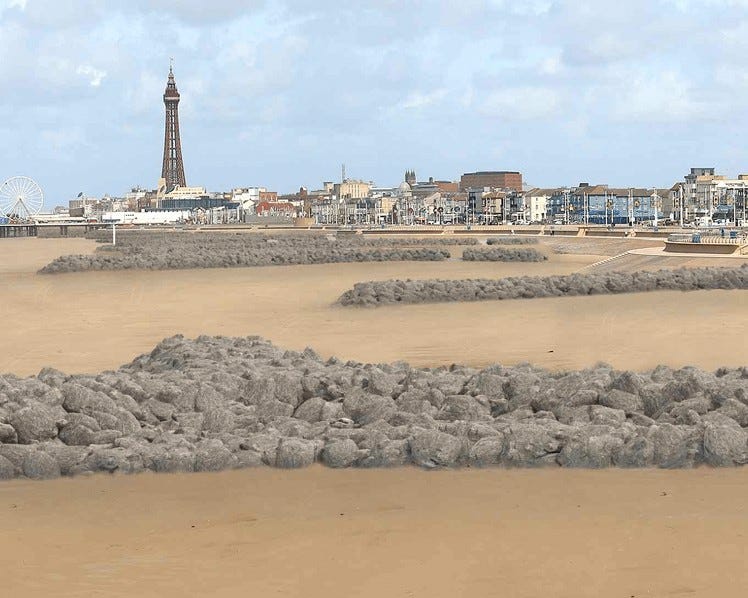
The £57m plans - dubbed the Blackpool Beach Management scheme - will mean the creation of groynes that will measure around 100 metres long and be placed 150 metres apart across the beach.
The reason put forward is that the levels on Blackpool’s beaches are lowering, exposing the clay beneath, and it is creating a risk to coastal defences. It is not unique to Blackpool - and broadly considered to be a consequence of climate change.
The rock groynes are designed to trap and retain the sand and therefore reduce the risk of coastal erosion and flooding in the long term. They have been installed in places like Mappleton, Clacton, Felixstowe and Poole. In Bournemouth, they use timber groynes rather than rock.
But the RNLI, which operates from the Blackpool Lifeboat Station, says the groynes will create a significant reduction in space for them to operate safely and force people out into deeper water to undertake activities.
They also believe that there is a risk that children would become stuck in the groynes - citing the example of a nine-year-old girl becoming stuck in Aberaeron in Wales.
But they add that they want to engage with Blackpool Council to mitigate these risks as they acknowledge the need to protect the coastline.
A spokesperson for the RNLI told The Blackpool Lead: “The RNLI has lodged an objection to a proposed scheme to introduce multiple rock groynes at Blackpool. The objection outlines concerns over the impact the project in its current form will have on both the RNLI’s lifesaving ability and public safety.
“With so many groynes and the high visitor numbers, the RNLI is concerned about the potential for serious accidents.
