


Hello and welcome to The Blackpool Lead.
Plans for an underground heating network at Blackpool - still awaiting funding - sound like the sort of ambitions we hear about for years but never happen.
But dealing constructively with the energy and heat generated by data centres is an issue that many areas in the UK will need to tackle.
So it is with the data centres at the Silicon Sands development. So today, we’ve looked in-depth at the plans for Blackpool.
In December, we are offering 20% off the price of a subscription if you make it as a gift to somebody else. You can read about our special Christmas offer here.
Blackpool briefing
🎒 Blackpool South MP Chris Webb has called on the Government to immediately provide funding for two new specialist SEND schools in Blackpool. The MP made the call in light of recent national announcements on SEND (special educational needs) provision. In October, Webb launched a survey on support across Blackpool South and says the results made stark reading. Nearly 200 parents, carers and educators responded, painting a clear picture of families and staff stretched to breaking point and reinforcing the urgent need for more SEND provision locally.
🍴 A new restaurant with the option of a takeaway looks set to open in Blackpool town centre in the near future. The plans got the green light after an application for the installation of a new shop front at 43 Talbot Road was approved by Blackpool Council. Separate to this, an application for a new premises license for the same address has also been approved, following a successful submission to the Council’s licensing department. The premises are currently empty, awaiting the necessary work.
🌳 Proposals for a new purpose-built Scouts headquarters and community hub in Blackpool have now been submitted to planners. The new centre will be located at the former Methodist Church site on Midgeland Road and as well as a Scout centre, it will offer numerous opportunities for the wider community. Before the application was submitted to planners this week, Blackpool District Scout Council held a public consultation event, to allow people to view the plans and make suggestions. Funds from a legacy have been secured for the project but the Scouts Council says it will welcome any additional support.
Ambitious heating system to be built underneath Blackpool - if funding can be found

By Michael Holmes
A £179m low-carbon heating system is set to be built under the streets of Blackpool - if funding can be found.
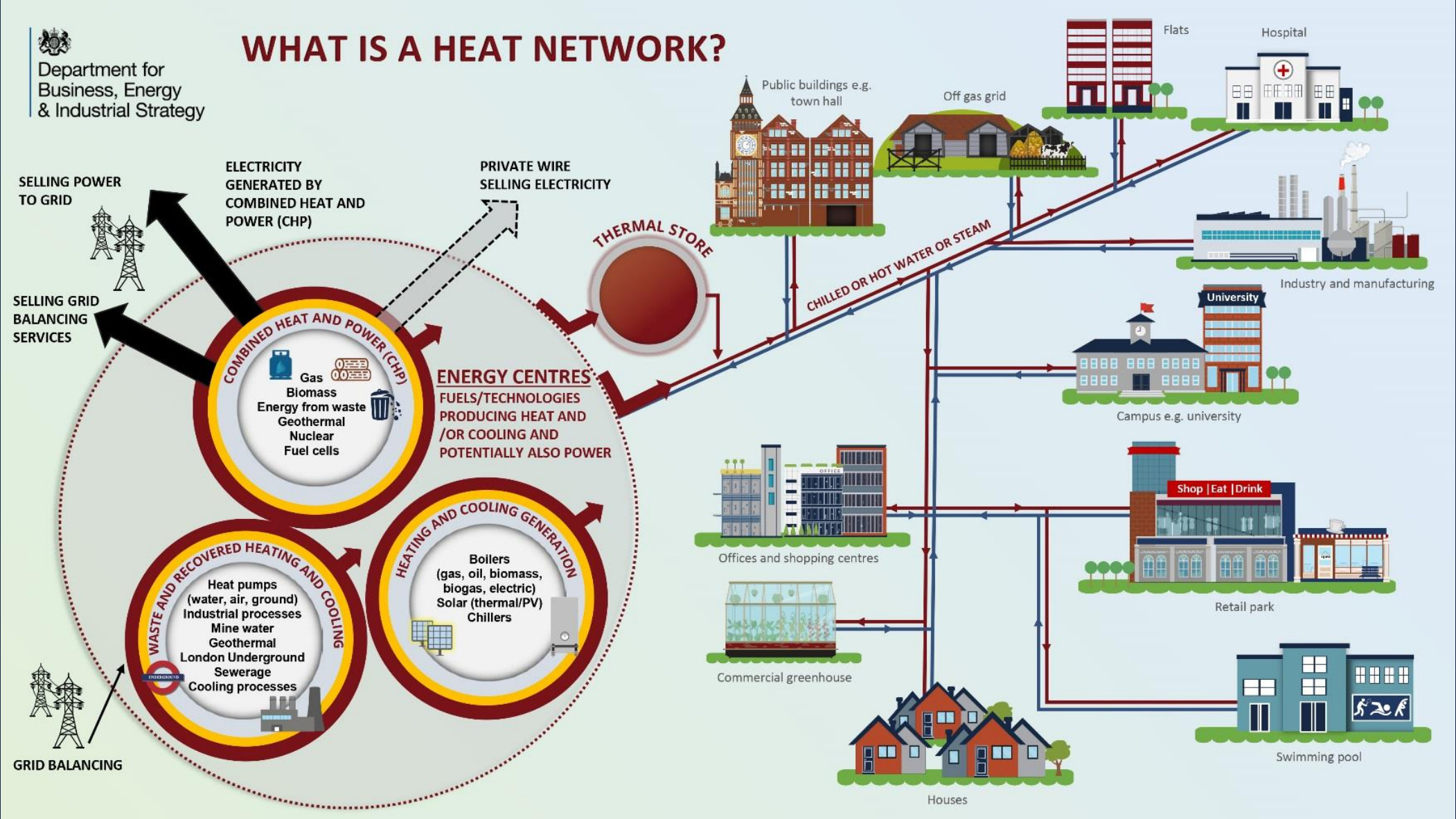
The scheme would take wasted heat from data centres at the Silicon Sands development at the Blackpool Airport Enterprise Zone and run it through a network of underground water pipes to more than 3,300 buildings in the town.
The conceptual plan - still years away - is to initially supply four sectors where the heat demand has been deemed to be the greatest, including the area from the Sandcastle Waterpark in South Shore to the town centre, including the Winter Gardens, Houndshill Shopping Centre and the Town Hall.
The area around the Enterprise Zone, industrial estates around Peel Park and the area around the Victoria Hospital have also been earmarked for the so-called heat network, which would come with a carbon saving of 99%, saving 1.8m tonnes of CO2e and improving air quality.
“Heat networks achieve economies of scale,” said Cllr Jane Hugo, the council’s cabinet member for climate change, in a report seen by The Blackpool Lead.
“Build-out is assumed to occur in phases to ultimately connect four areas where the heat demand is greatest, clustered around large anchor loads.”
She added: “As housing is connected to this low-cost, low-carbon network, it may offer (an) opportunity to lift vulnerable residents out of fuel poverty, depending on the business case and operating model.”
It means that, instead of buildings such as the Sandcastle Waterpark, which currently racks up significant energy bills, having their own heat sources such as boilers or electric heaters, they would be able to tap into clean and more affordable energy from the heat network.
Types of properties able to connect to such networks, dubbed “central heating for cities”, include those that are already communally heated, as well as non-domestic buildings over a certain size, including hospitals, hotels, universities and office blocks.
Blackpool was given cash from Innovate UK, the country’s innovation agency, as part of the £60m Net Zero Living programme to work out how a heat network could be developed in the town.
Councillors and local authority workers went on to investigate such schemes around the world, including in Scandinavia, where heat networks are widely used.
In Denmark, 65% of homes are served by heat networks, rising to more than 99% in urban areas such as central Copenhagen.
The UK Government wants heat networks to deliver 18% of demand here by 2050, up from the current 2%.
One of the country’s biggest challenges in its net zero ambitions is decarbonising home heating, with its reliance on gas making it a key driver of the nation’s fossil fuel dependence.
Heating is responsible for about 20% of UK emissions.
Some 28 towns and cities were chosen to be “advanced zoning pilots”, with funding and support allocated to develop heat networks, while a national consultation was launched, with the outcome expected imminently.
While Blackpool was “not supported in the advanced zoning pilots”, Cllr Hugo’s report said, the cash from Innovate UK allowed the council “to gather the data and develop the understanding so that it can take a lead in defining how heat networks may be developed” in the resort.
The heat demand from 64,000 buildings was assessed, with clusters of heat demand identified.
A study concluded that the “heat demand and areas identified in Blackpool align closely with the national model so we can expect Blackpool to be designated as a heat zone”, added Cllr Hugo.
“The linear heat demand in Blackpool is 2.5 times greater than the threshold value anticipated where heat networks become cost-effective.”
The council hopes to secure money from the next round of the Green Heat Network Fund, which is predicted to be held in March.
But Cllr Hugo fears a “very competitive” next few rounds, with commercial operators likely to have well-developed bids already, whereas town hall bosses still have work to do.
A feasibility study has still to be reviewed and tested, the initial network map needs to be optimised, a business case has to be developed, procurement processes have yet to be initiated and match funding from the council has to be confirmed.
“The key for Blackpool will be to make the case that the heat network is not a ‘standalone’,” Cllr Hugo said.
“Instead, it is part of the proposed Silicon Sands ecosystem which delivers a ‘just transition’ for Blackpool.
“Additionally, by ensuring renewable energy is used twice, it is of national significance in the role that the ecosystem can provide (in) balancing grid supply and demand.”
The six towns and cities to pilot heat networks were announced last October, with schemes in Leeds, Plymouth, Bristol, Stockport, Sheffield and two in London given a share of £5.8m of government funding to develop the zones.
Construction is expected to start next year.
Miatta Fahnbulleh, Minister for Energy Consumers, said the networks “will play an important part in our mission to deliver clean power for the country, helping us take back control of our energy security”.
She said: “As well as energy independence, they will support millions of businesses and building owners for years to come, with low-cost, low-carbon heating, driving down energy bills.”
A £1bn heat network scheme was launched in Westminster last year, taking heat from sources including the London Underground to the likes of Downing Street and the Houses of Parliament.
And a £95m scheme was announced for Milton Keynes, starting with the city’s NHS university hospital, last month.
